‘The Social Reckoning’ Review: A story unfit for the pacing of a feature-length film, but nevertheless just meaningful enough to be told
Following up The Social Network always felt like an odd undertaking. The story of Facebook’s creation has been fully told, and besides, why invite that measuring stick of comparison in for little gain? Sequelizing the film is consequently not only an unusual choice, but also paints a target on its back. Yet, Aaron Sorkin intentionally took on this unnecessary burden with The Social Reckoning. Did he prove why this was worth the effort? Did he pay off that risk, telling an equally compelling story?
Well, he doesn’t completely fall flat on his face–this isn’t the pile of garbage many are exaggerating it to be–but nor is it anything all that great. That was the expected result. There was never going to be anything near as inherently fascinating to cover in Facebook’s lifespan as its literal creation, following a college kid in a dorm room who rapidly becomes a global CEO. Furthermore, the captivating character work, performances, and direction of David Fincher were never going to be topped. The only concept that could have matched any of that would have been Facebook’s downfall, which has yet to come, if ever.
Sorkin smartly deviates from The Social Network to differentiate the two, selecting a different timeframe in Facebook’s history to explore with no bearing on what came before, while introducing a tonal shift involving a swath of new characters. However, the difference in plot magnitude is striking; the narrative told here focuses on the events leading to a series of exposing investigative reports that came and went, which ultimately feel like a blip on the radar for a tech giant that is still excelling today. Because it is another historical account, the final outcome is already known, so the journey itself has to be the gripping part.
Unfortunately, The Social Reckoning is straightforward and by-the-numbers, quite literally peppering the audience with constant statistics to drive its plot rather than any layered complexity. That doesn’t mean it lacks depth entirely, but it certainly pales in comparison to its predecessor. Crucially, though, because the film is as standalone as a sequel could be–carrying over only Mark Zuckerberg while examining a whole other side of Facebook–it becomes much easier to evaluate on its own terms. Not that it lightens the skewed comparisons and structural faults, but it allows the film to be seen in a better, passable light–at least for me.

The Social Reckoning covers the goings-on inside and around Facebook during 2019–2021, culminating in the period when the company faced intense scrutiny and investigative reporting claims by The Wall Street Journal. I would expect anyone reading this to already know what those disclosures unearthed, but for the sake of avoiding “spoilers,” I will hold off on the specifics. The film differs significantly in genre from The Social Network, pivoting towards a focused, corporate drama. While it covers a comparable span of time, its scope is much tighter, honing in on the intrigue and investigative work surrounding Facebook’s darker secrets–specifically how they manipulate their algorithms and backend code to further drive platform engagement, neglecting user safety and ethics in the process. The throughline is much clearer, and there is nothing all that complex when it comes to what is actually depicted on screen.
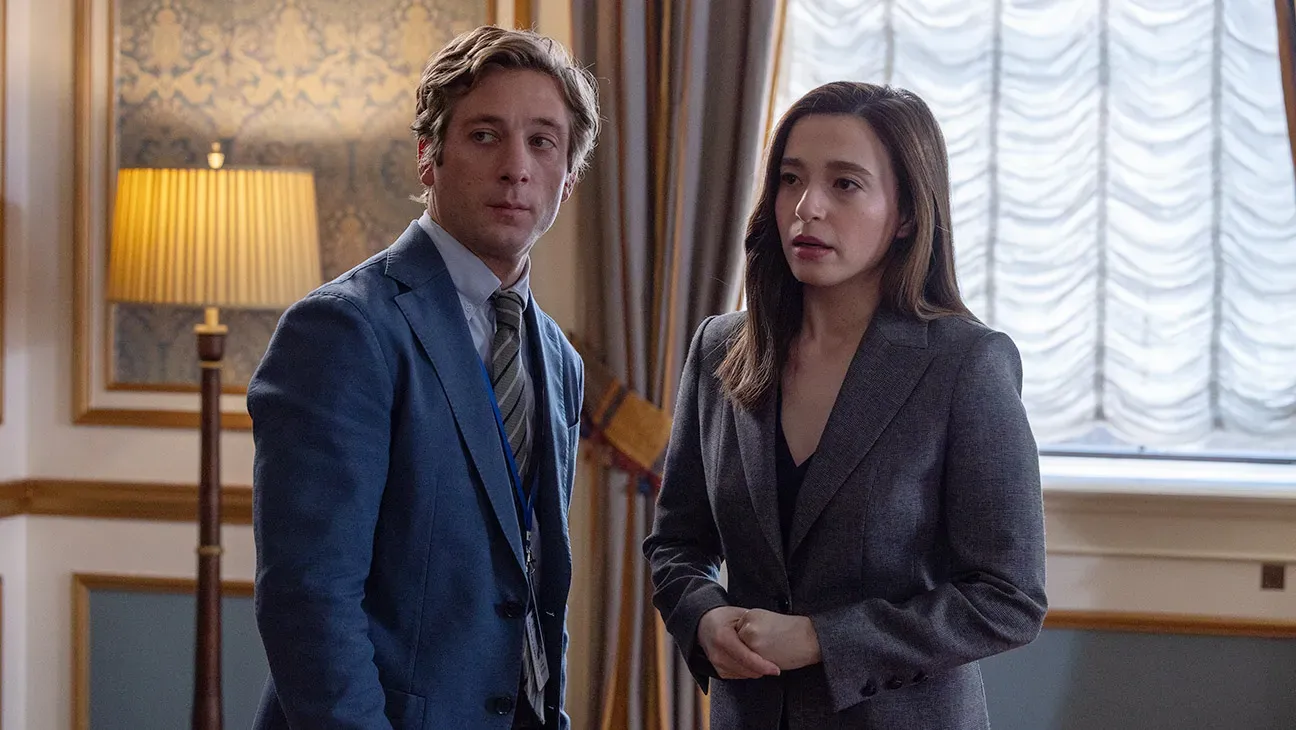
Two lead characters make up the better portion of this throughline: Frances Haugen (Mikey Madison) and Jeff Horwitz (Jeremy Allen White). Frances kickstarts the plot as the Facebook employee who eventually becomes a whistleblower, offering an inside look into how the company operates while balancing her personal conflicts and mixed feelings with it all. She is caught between a rooted belief in the company’s core mission to strengthen social connections and a repulsion from its relentless engagement tactics, all leading her to cooperate with Jeff. He provides an outside-looking-in perspective on the situation occurring behind closed doors as a Wall Street Journal investigative reporter. This pairing starts out intriguing, as Jeff becomes Frances’s outlet for sharing confidential information, and the balance between investigative journalism and moral boundaries quickly comes into play.

The narrative dynamic just as quickly loses much of its weight the moment you realize, as a viewer, you already know every secret they are trying to uncover and the eventual outcome of the investigation. Maybe you don’t know the exact details or specifications, but you have the general gist. There are no surprises. The only mystery is the how behind it all–how the whistleblowing operation developed and how it all successfully came together in the end. That is where the engaging element of the scoop could have come from because, to be clear, it’s okay to know what is going to happen or be able to predict something if the experience is still engrossing.
The problem The Social Reckoning has is that its quest mainly just consists of the two characters meeting at the same park bench or hotel room to slowly review new documents and information, so there is not very much else left for the screenplay to work with. The film essentially just tells you everything through the mined data, making the real-world impact nearly nonexistent. It tries to mix in a couple of scenes showcasing the tangible human consequences of social media, but they are glazed over more often than not and left as background noise. However, it is those kinds of scenes that should have been the primary drivers of the story, since they are more resonant, relevant, and relatable than just numbers. You need to first hook the audience emotionally; then you can bring in the statistics to back it all up and drive the point home. Reversing that order robs the film’s central theme of its weight.

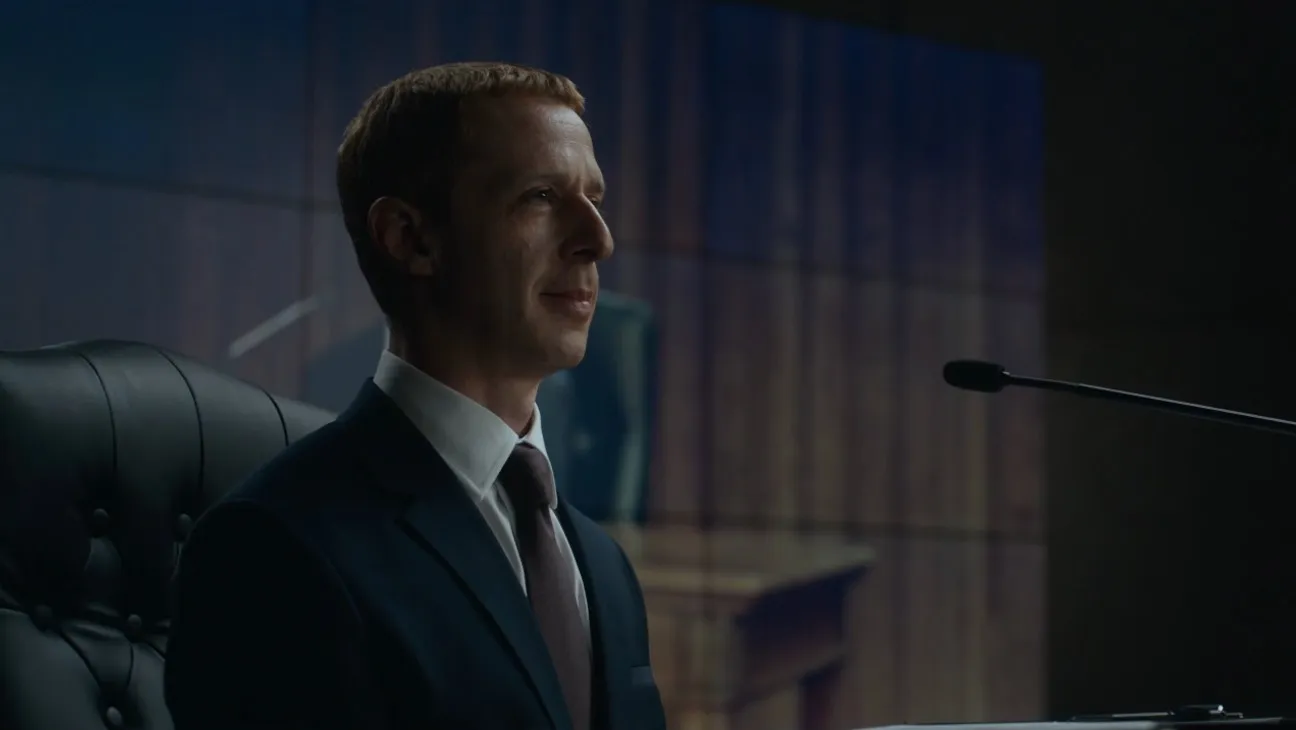
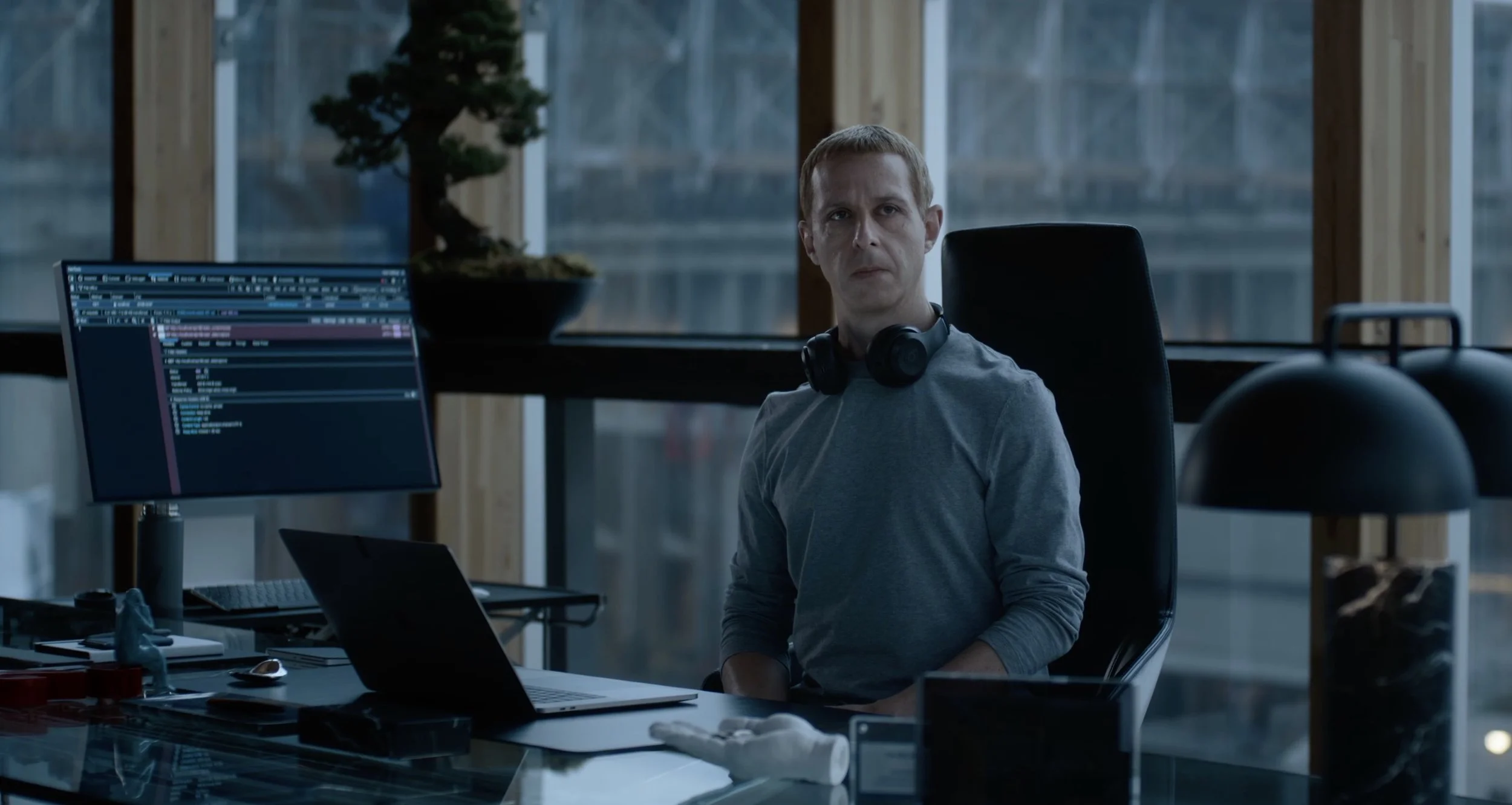
The remaining subplot shines the spotlight on none other than Mark Zuckerberg, with Jeremy Strong taking over the role from Jesse Eisenberg. I found this section of The Social Reckoning to be much more engaging, as it demonstrates Zuckerberg’s mindset around Facebook, including how he views its purpose and what it represents. It reveals his willful ignorance, depicting how he views the platform as a public space–free for anyone to do as they please within the law–rather than feeling any sense of responsibility for monitoring and supervising it. This development poses the exact questions many have towards social media. While it is a smaller role, it ends up making just as big an impact in the end. Focusing on Strong for a moment, he almost effortlessly pulls off the character and feels like a perfect continuation of Jessie Eisenberg’s portrayal. Although Zuckerberg has the least screen time of the three lead characters, all of his looming aura remains.
The Social Reckoning dives into the dark details of Facebook through its drama-driven plot, as previously established. And although, as I said before, the film loses momentum without a super riveting investigation propelling it, I think the narrative still proves its point effectively enough by the end. It overcomes some of its execution woes and poor method of portrayal by integrating historical events that took place in 2021, which simultaneously convey the dangers and consequences of unsupervised social media speech. I was surprised by how natural it all felt, and very little of it felt forced.
I took it as a vital mental reset to be mindful in the midst of all the social media that surrounds us today. Because even though I already knew this final message beforehand, the reinforcement is strong. It is also important to note that everything the film says is unequivocally true. For me, the movie proved its point before I even saw it; shortly before my screening, I reshared an extremely negative Letterboxd review of Project Hail Mary to a friend, plainly illustrating how hatred and anger fuel the most action when it should be the other way around. Even though the ending is not necessarily a happy one, especially when considering where society is at today, it still left me feeling a lot better about what the film was trying to accomplish despite all the imperfections.

The Social Reckoning is framed best as a somber reminder and account of what happened with Facebook during this period of dismay for the company, and what those Wall Street Journal findings meant in the big picture of social media. Although the impact is certainly weakened by just looking at where the company stands today, that may prove the film’s worth even more, indicating what hides behind the big corporate facades. I think it is essential to be aware of how social media is a largely fabricated and controlled space that is not indicative of real life.
The film’s overall message is really its only exceptional element, and while I do not think any of it was explicitly bad, there were plenty of subpar sections balanced out by more solid stretches. The plot and events are mainly just fine and enjoyable enough until the final act elevates the experience. If someone else had chosen to make this same movie and titled it something like The Facebook Files, it would probably not be receiving the amount of disdain it is right now. Even still, those who are aggressively sharing such negative feelings online are actually just proving the film’s point even more.